
Pickleball has taken the world by storm in recent years! It is even considered Canada’s fastest growing recreational sport according to Univerus Sport and Recreation. I recently became interested in pickleball after my mom and dad kicked my butt and left me thinking “I’m too young to get beat by my own parents”. So my wife and I bought some paddles, learned the scoring system, and quickly realized what all the hype is about. In my clinic, Big Sky Chiropractic, I get people coming in every week with injuries sustained during pickleball. Today I want to go over the most common pickleball injuries that I see in my clinic, and what you can do to help prevent these injuries from happening to you.
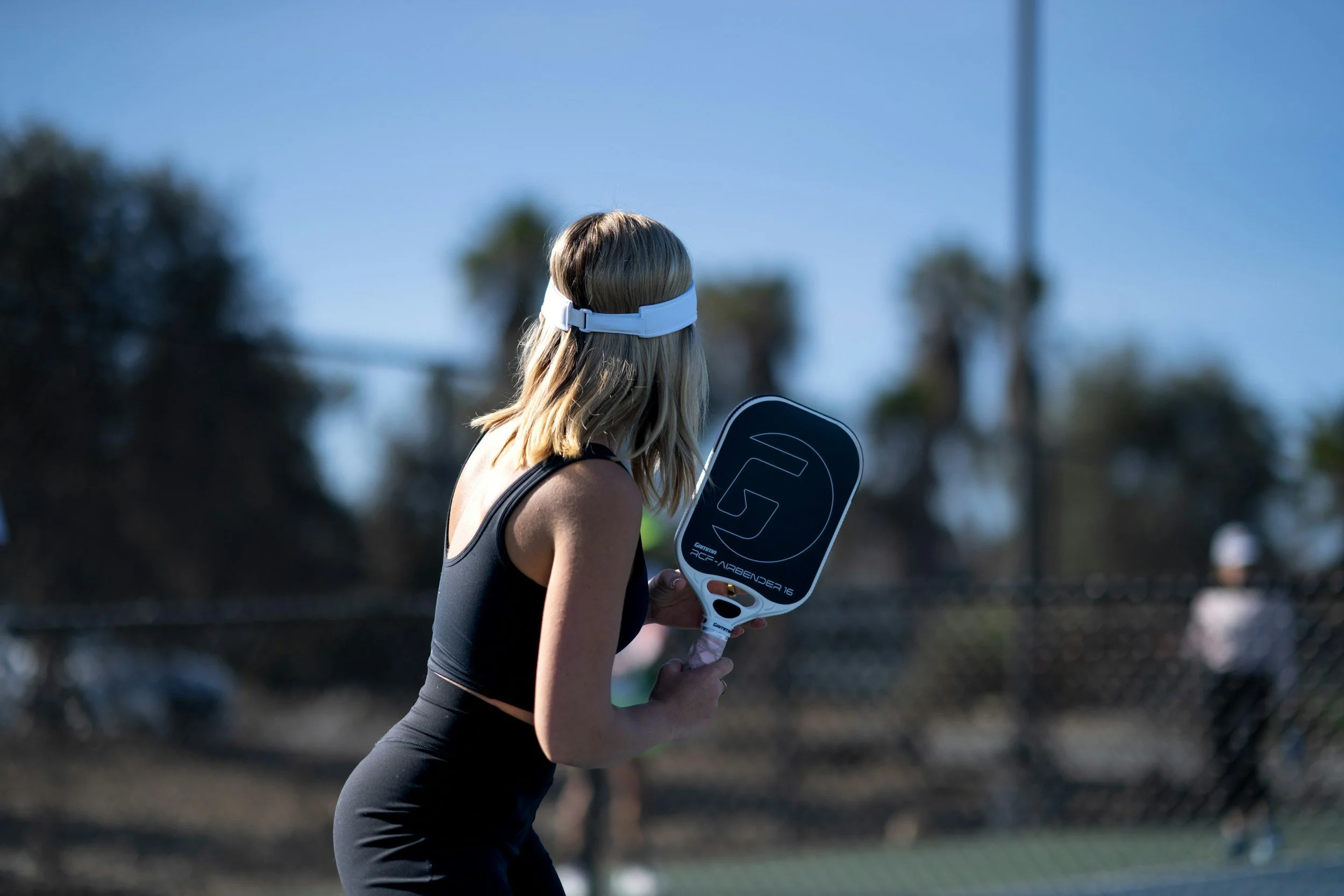
1) Lateral and Medial Epicondylitis
The first injury/condition that I see most often in my clinic is tennis elbow. You may know it as lateral epicondylitis, but I like to call it (what might be a more appropriate term in this case) pickleball elbow. Pickleball elbow is a pain and irritation of the tendons on the outside of your elbow and the top of your forearm. Medial epicondylitis is the same condition but affecting the tendon on the inner part of your elbow (near your funny bone), and this is commonly called golfer’s elbow. Both of these conditions are found in pickleball, and they have a similar cause and treatment. In these conditions, you may experience the following symptoms: pain and tenderness experienced on the outer (or inner) part of the elbow, diminished grip power, and trouble completing tasks requiring the wrist and hand.
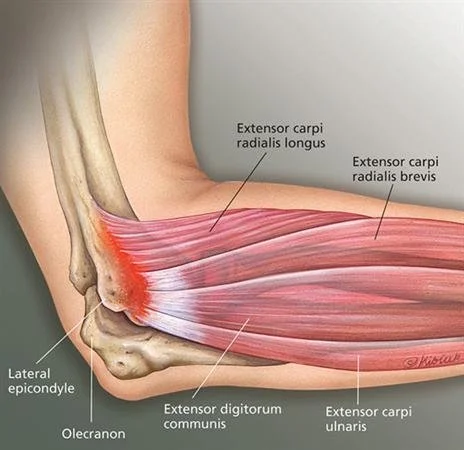
What is a tendon? A tendon is a soft tissue that connects muscle to bone, and is constantly getting pulled on by muscles when they are being used. In the case of pickleball, the swing is very repetitive, and this repetitive stress can lead to micro tears in these tendons.
(This image shows the forearm extensor muscles attaching to the bone via tendon. This is where pain can occur from pickleball elbow.)
(Image via WikiSM / licensed under CC BY-SA 4.0)
So what is the cause of pickleball elbow: repetitive motion and overuse during the pickleball swing.
How can you avoid pickleball elbow, and how can you get rid of it if you currently have it? Here are the 3 strategies that I recommend:
1) Build resilient tendons
Stretch and strengthen your forearm tendons (and muscles). It is especially important to strengthen the forearm with eccentric movement to increase tendon strength (Anam F Pathan, H V Sharath).
For a more in-depth rehab program, email me at dr.egert@bigskychiropractic.ca
2) Change your technique
Avoid the death grip on your paddle.
Swing with your whole body, including your core. Don’t just swing with your arm or by flicking your wrist.
3) Soft tissue work and manual therapy
In my office in Calgary, Alberta, I do a variety of soft tissue treatments including soft tissue mobilization, joint mobilization, and targeted massage. These treatments help to reduce muscular tension, promote blood flow, and speed up the healing process according to Anam F Pathan, H V Sharath
You can book an appointment here
2) Achilles Strain/Rupture/Tendonitis/Tendinopathy
Explosive starts, stops, and changes of direction happen during every rally in pickleball. These movements put a lot of stress on your achilles tendons. Achilles injuries can range from a slight strain to a full on rupture. You can also experience achilles tendonitis/tendinopathy which is an overuse injury caused by repetitive or intense stress on the achilles tendon. Tendonitis of the achilles is similar to what we just talked about in pickleball elbow. I treat achilles strains and achilles tendonitis/tendinopathy in my clinic in Northwest Calgary, but full achilles ruptures would be referred out to a specialist.
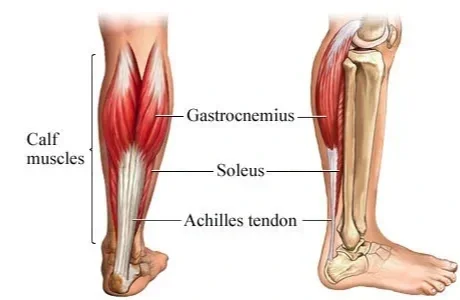
The achilles tendon connects the calf muscles to the heel of the foot. It is involved in standing on your tippy toes, walking, running, and jumping.
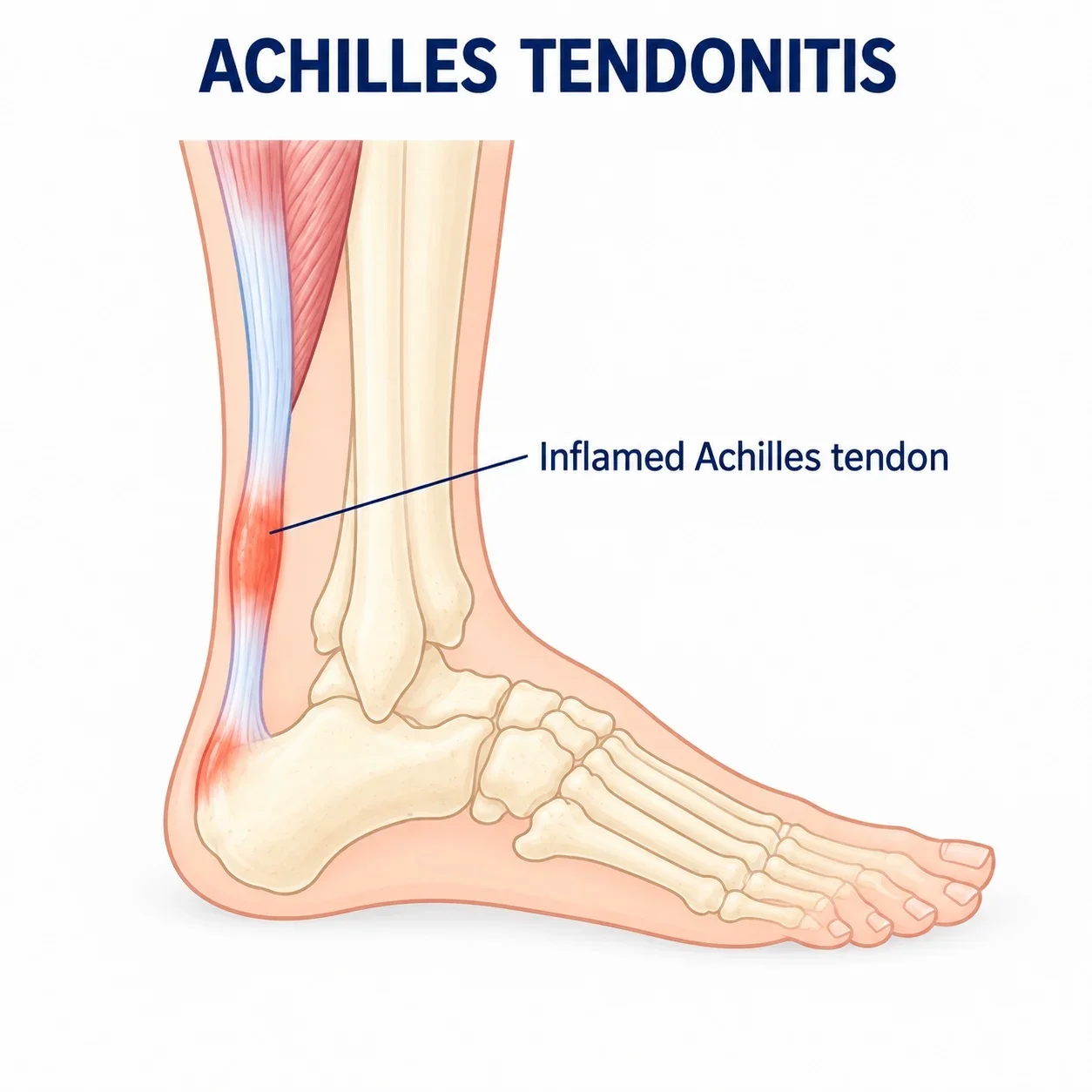
This is where achilles pain will often present, but achilles injury can present itself anywhere along the achilles tendon including closer to the heel.
(Images via WikiSM)
Since there are a variety of injuries that can happen to the achilles, I won’t go into the specific rehab and treatment options once you have been injured. What I will talk about in this section is what you can do to try to avoid these injuries from happening in the first place. Here are the strategies which I recommend:
1) Build resilient tendons with slow strength work
Strength training helps to build muscle and tendon strength. Focussing on eccentric movement is recommended to focus on building tendon strength.
Gradually increase your activity. Tendon strength can be increased, but it happens slowly.
2) Train quick explosive movements
This is to build the strength and elasticity in your tendons needed for quick movements on the court.
This is often called plyometric training, and can include jump rope, skipping, hopping.
This type of training has shown to increase tendon strength, increase collagen synthesis and remodel existing collagen.
Here are a couple of interesting articles to read on this topic: article 1, article 2
3) Soft tissue work and manual therapy
Manual therapy to help with tight calves, hips, or other areas of your body can help take stress off of your achilles tendons and allow you to move more freely on the court.
If you are in Calgary, you can book an appointment here
4) Wear proper footwear
Get fitted for proper court friendly shoes.
5) Warm up before playing pickleball
Show up early and develop a short warm up routine including some mobility work and some light plyometric and aerobic activity to warm up your body.
3) Shoulder Rotator Cuff Tears/Strains
The shoulder is a very integral part of the pickleball swing. Overhead, side, and underhand swings all stress the shoulder in a different way. I hear many people talking about the rotator cuff. The rotator cuff is a group of muscles that is responsible for stabilizing the shoulder joint, as well as certain shoulder motions including internal and external rotation. See the picture below which highlights the 4 rotator cuff muscles: Subscapularis, supraspinatus, infraspinatus, and teres minor.
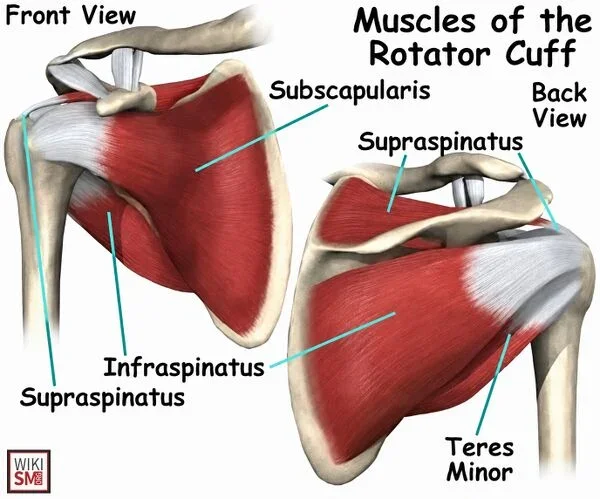
(Images via WikiSM)
Many people come into my clinic and tell me they have rotator cuff issues. It is very important for me as the clinician to do a thorough exam to identify which of the 4 rotator cuff muscles are involved in the injury and to what extent (sometimes imaging is necessary to determine this with full confidence). Each of the 4 muscles is responsible for a different movement, so the rehab process will include very specific movements for each muscle. For additional reading, here is a great in depth article about the rotator cuff: Rotator Cuff. Whether you have a current rotator cuff injury, or are looking to improve your shoulder health to avoid rotator cuff injury, these are the main general strategies that I recommend:
1) Shoulder mobility
You need to be able to go through the full range of motion needed for all of the different pickleball swings. A small amount of mobility each day is better than an hour once per week. Consistency is important.
Here is a great video made by my friend and fellow chiropractor Dr. Thomas Dachs. Check out this video for some great shoulder mobility drills: Shoulder Drills Video
For a specific rehab program tailored to you, book an appointment with me or email me at dr.egert@bigskychiropractic.ca
2) Shoulder strength and stability
Some great exercises are: alternating standing shoulder press, wood choppers (low-to-high or high-to-low), 90º shoulder internal rotation and external rotation with a small weight, med ball slams, shoulder lateral raises, pushup plus.
If you have any questions about the above exercises feel free to email me.
3) Manual therapy
Manual therapy can include soft tissue therapy, joint mobilization, and other hands-on therapies.
Manual therapy can help reduce muscular tension, promote blood flow, and speed up the healing process in the rotator cuff.
You can book an appointment here
I hope the above information gives you an idea of the main areas to focus on in your exercise and treatment in order to stay injury free on the pickleball court. Thanks for reading all the way to this point. If you have any questions about the content in this blog post, or have any requests for future blog posts, please email me at: dr.egert@bigskychiropractic.ca
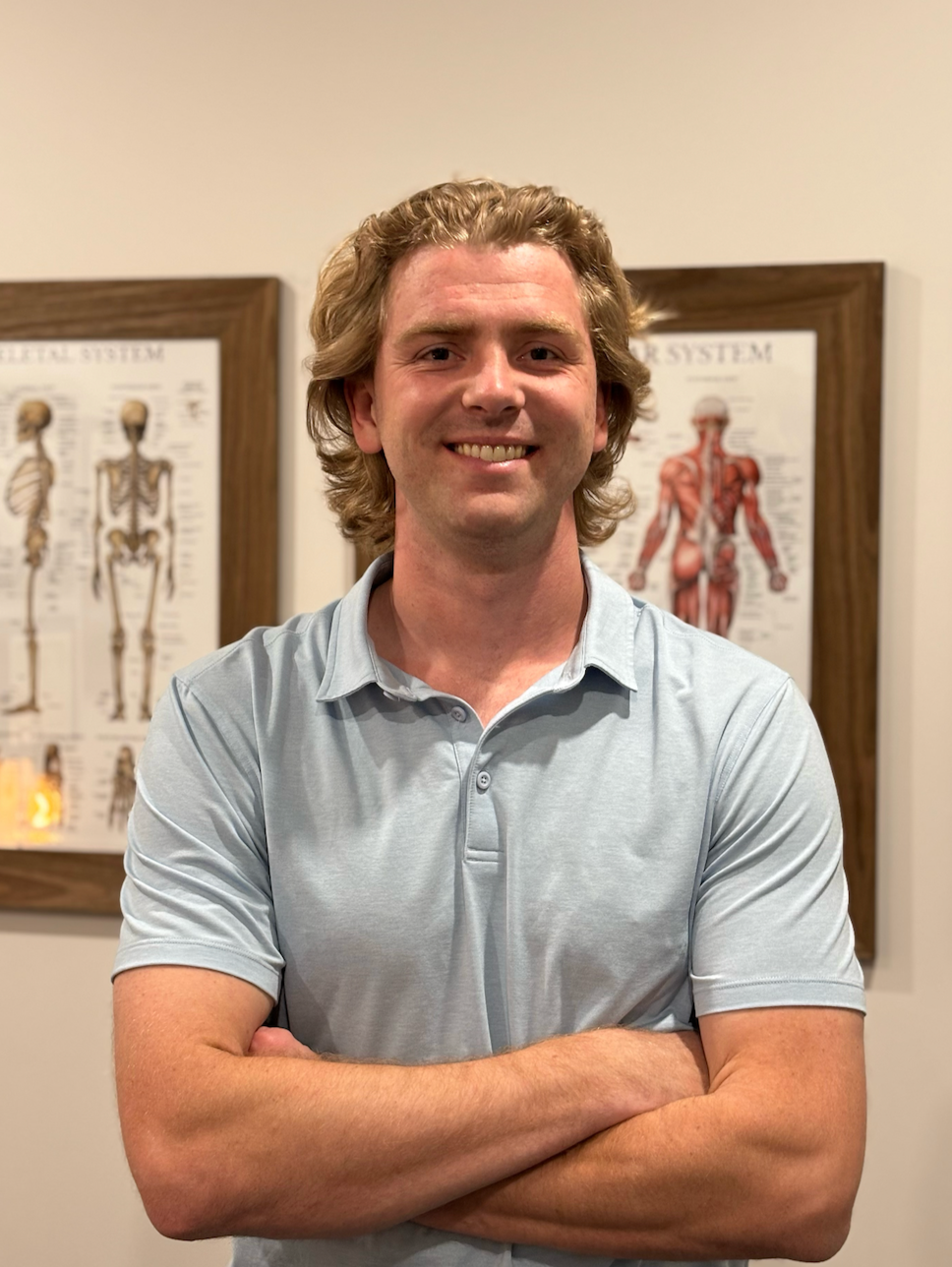
Dr. Alex Egert. Big Sky Chiropractic, Northwest Calgary
Dr. Alex Egert D.C. is a chiropractor and owner of Big Sky Chiropractic in Northwest Calgary. He has a passion to help people become pain free and perform at their best.
